Sports Performance Coach Laura Ahti on
Why Strength Training is Crucial for Equestrians
MD athlete and Finnish Sports Performance Coach Laura Ahti explains why strength training is crucial for equestrians – and shares her best workout tips.
Lovisa
Mon 9 Feb - 26
Sports Performance Coach Laura Ahti on
Why Strength Training is Crucial for Equestrians
MD athlete and Finnish Sports Performance Coach Laura Ahti explains why strength training is crucial for equestrians – and shares her best workout tips.
Lovisa
Mon 9 Feb - 26
Laura Ahti, MD athlete and Finnish sports performance coach, is a true expert on the subject of strength training for equestrians. Read on to get her thoughts on the importance of strength training, her best practices, and how to get started.
Why is strength training important for equestrians?
– Riding is a skill sport, which means that great performance in the saddle is rooted in precision, reaction speed, balance, and focus. Great riding is not as highly dependent on raw physical strength or endurance compared to for example soccer, ice hockey, or CrossFit. That being said, if you’re not strong enough as a rider, your ability to be quick, ride in harmony, and have a balanced seat is simply not possible. This sport often confuses strength training with becoming ’too strong’ to ride softly, Laura says and continues:
– But the reality is that to be able to ride with softness, you must never be in a situation in the saddle when you feel like you don’t have strength in for example your core and hip area to effectively tell your horse to come back and collect. Because if that happens, you end up using your hand more strongly – and that’s exactly what we don’t want, right? Strength training tailored to the sport is the foundation of harmonious riding – and an essential factor in horse welfare, as crooked riders often lead to crooked horses.
How can strength training improve performance in the saddle?
– With strength training, I mean progressively programmed training either at home (preferably with dumbbells or other equipment) or gym training. Pilates for example is a great way to train to improve mobility, body control, and muscle endurance – but it lacks the progressive overload (which means adding weights and/or reps to keep telling your body to constantly improve). In my work, I like to combine both of these types of workouts in riders’ workout plans.
Laura continues:
– We must always remember that nothing we do off-saddle can ever replace the hours we get to spend in the saddle doing high-quality riding, if your goal is to become a great rider. But what strength training will do is help you get the most out of those hours you spend riding and improving your riding skills.
“What strength training will do is help you get the most out of those hours you spend riding and improving your riding skills.”
– Laura Ahti
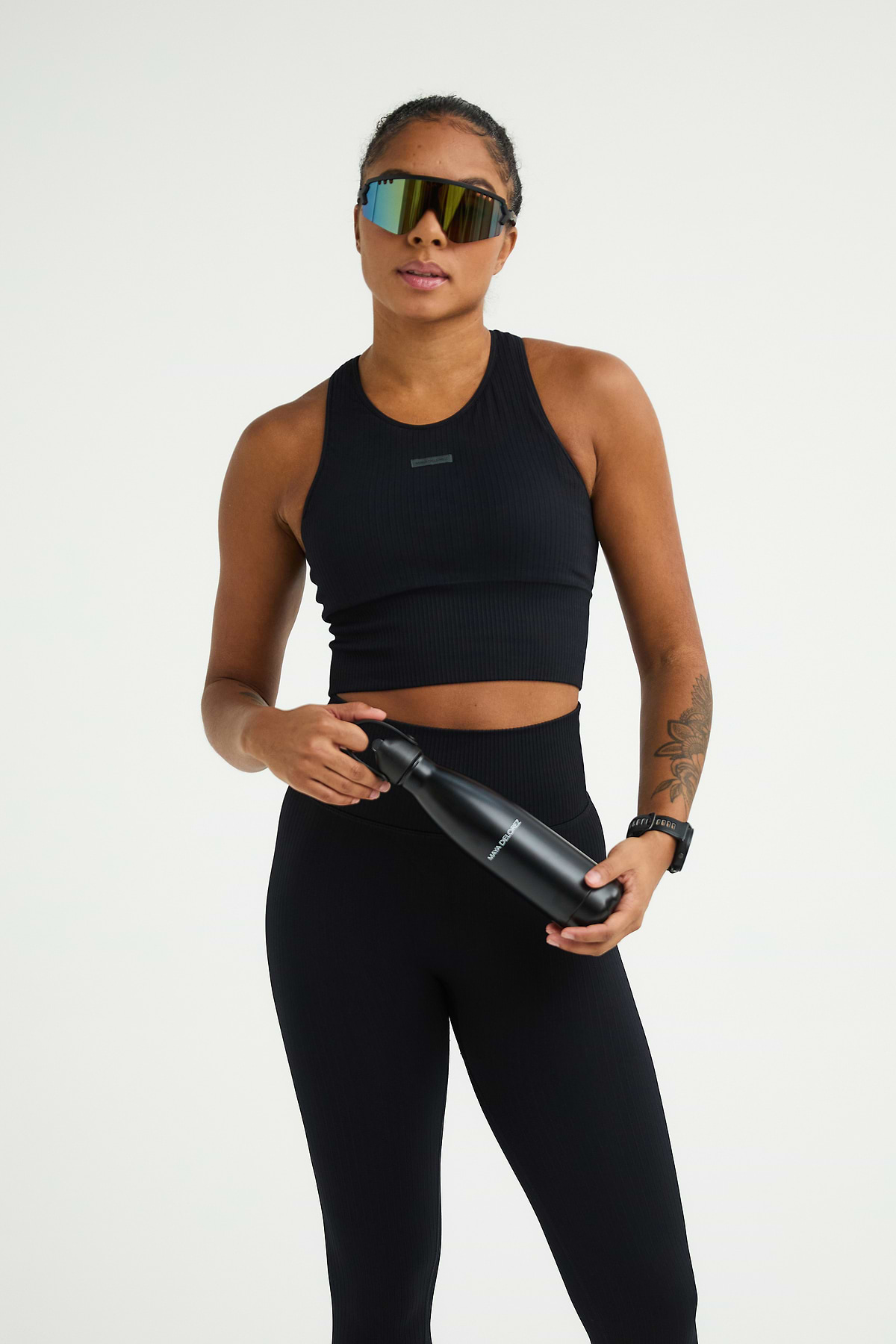
Strength training helps riders in two ways, according to Laura.
– First of all, when you ride, you should not be thinking about how to correct your forward collapsing posture or how to open your hips more to have your leg longer around the horse. Your body should be able to do all that automatically with softness and ease. Riders can improve their posture, symmetry, aid precision, relaxation in the saddle, and connection to their horse with well-programmed strength training.
– Secondly, if you ride without working out, that is going to show in your body with low back pain, hip tightness and asymmetries. So, we also need strength training to reverse the load and negative effects that riding may do to our body.
Which muscle groups are most important for equestrians to train?
– When I program strength training for riders, I also look at their discipline:
For dressage riders, strength capacity in muscles that help with posture is what we focus on. In general, this means muscles like the glutes, hamstrings, core, back extensor muscles, and upper body muscles.
Show jumpers need to be able to quickly change their position over fences in good balance. Furthermore, being in the light seat sets a different focus in their strength work. This means calf muscle strength, hamstring and glute strength, especially using effective hip hinge (hip flexion-extension movement pattern) over the fence, and of course, core and upper body.
For eventers, one must look at all three disciplines, but especially cross-country puts the biggest demands on riders physically. It’s extremely important to have enough strength and stamina in your legs, glutes, core muscles, and upper body to be able to effortlessly hold a balanced seat throughout the cross-country course.
– Generally, it's important to keep in mind that it’s never just about one single muscle group, but more about how the muscles work together in muscle chains. That’s why very traditional, isolated muscle strength work is not the best way to train strength as a rider, Laura adds.
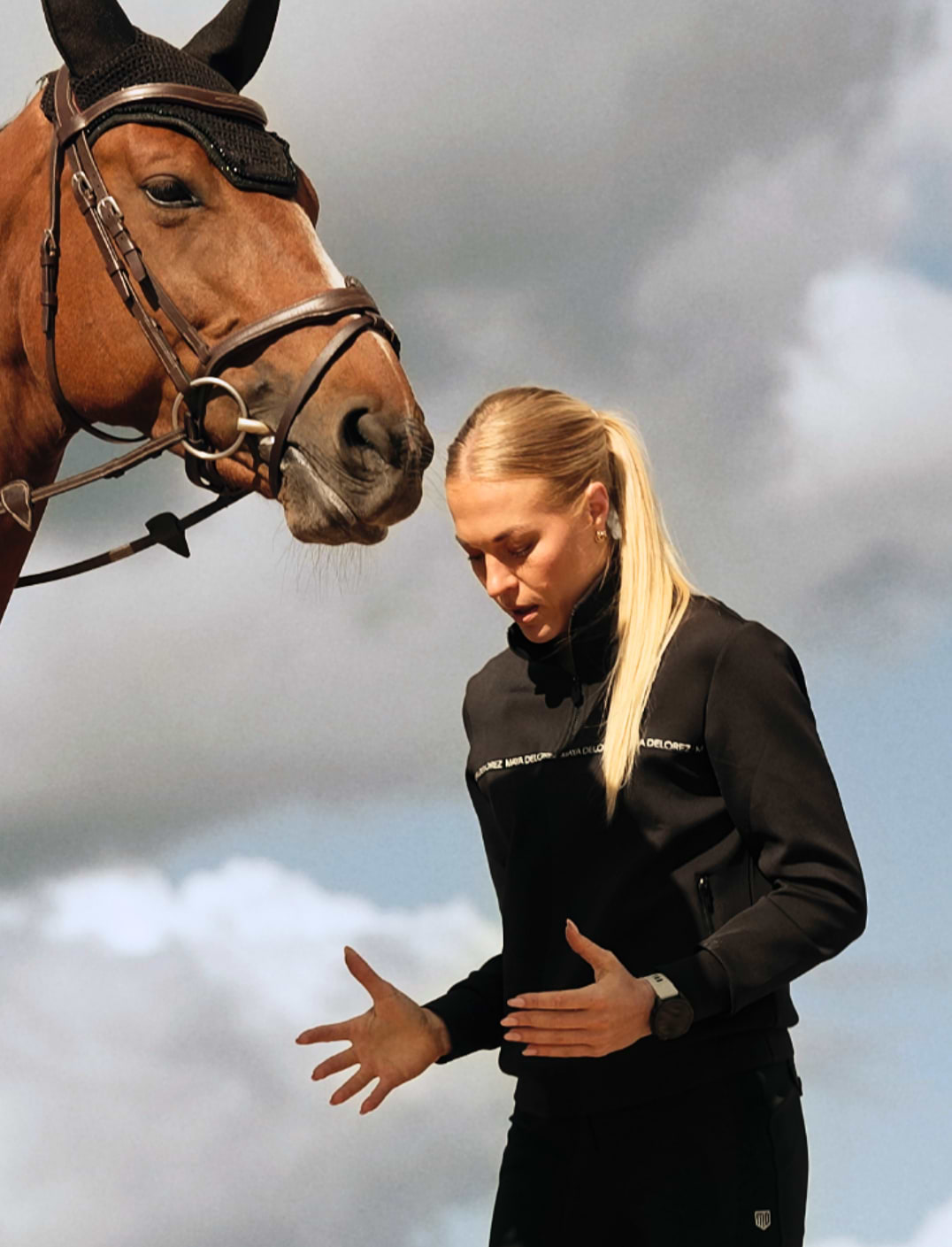
“It’s important to keep in mind that it’s never just about one single muscle group, but more about how the muscles work together in muscle chains. That’s why very traditional, isolated muscle strength work is not the best way to train strength as a rider.”
– Laura Ahti
In your opinion, is there something equestrians tend to miss or overlook when working out?
– A common misconception is that training for equestrians consists of mostly pilates and yoga-type training than the more athletic type of strength and conditioning training, that this somehow should make riders “too strong” or “too bulky”. But the reality is that to build too much muscle mass for this sport, you’d have to work really hard, and it doesn’t happen just by accident. Furthermore, in equestrian sports we often overlook the opportunity that lies in rider-specific strength training (which means combining active mobility movements, speed and coordination work, and individually targeted strength movements based on rider’s individual needs). We should be doing full body, multi-joint movements to teach our bodies to use muscles in a way that translates into harmony in the saddle.
Apart from strength training, how important is mobility for equestrians?
– It is very important for the ability to sit quietly close to the horse. Mobility means your ability to move through the range of motion in your joints. It’s not just passive flexibility. For example, to improve your hip mobility, you must combine opening up the range of motion with different dynamic stretches, with actively using this new, unlocked range of motion with strength movements. This way, you actually get results that stick. Otherwise, you end up stretching your hip flexors and hamstrings for the rest of your life without actually feeling a real difference.
If you could give one tip on how to get started with strength training, what would it be?
– Strength training doesn’t have to mean workouts that will make you too sore to ride well the next day, or workouts that are always 60 minutes long. You can start at home with a pair of dumbbells. I also do a lot of my own strength work at our home gym with different dumbbells! I’d also encourage you to find a program or a trainer that understands equestrian sports. This will change the way you feel about strength training, because it will finally translate into your riding.